
👀 A rare sighting

We are delighted to say that a bittern has visited Whitlingham Country Park recently!
We were thrilled to hear of this rare sighting, as bitterns usually prefer larger reed bed areas than we can offer here. There is only usually one sighting here every few years, so we are honoured they chose to appear again.
They are so rare that even BBC Springwatch and Winterwatch bird expert Jack Baddams has famously never seen a bittern in the wild, despite his extensive career in ornithology. He has apparently seen around 90% of the UK's bird species, but not the elusive bittern in the wild, as yet.
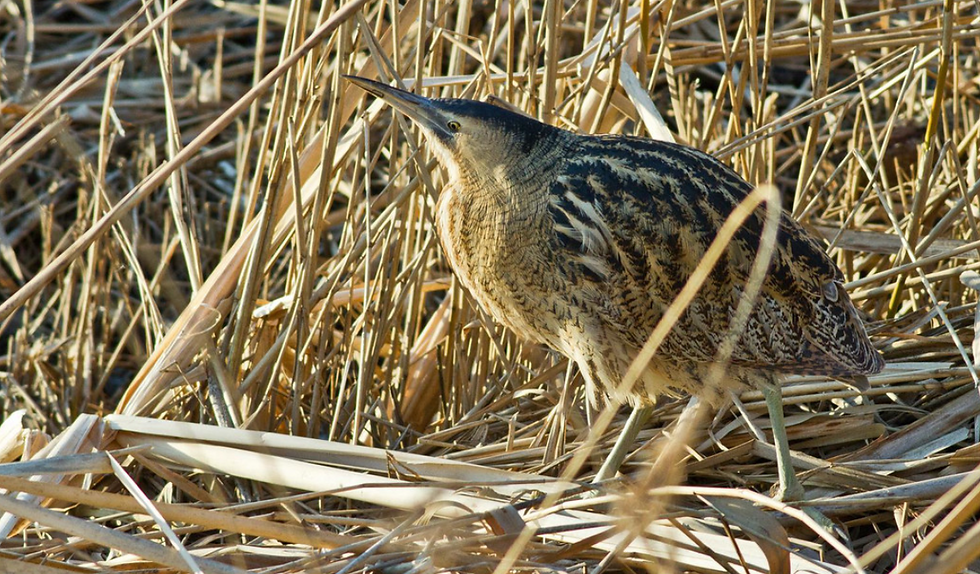
Bitterns in the UK - key facts
Bitterns are part of the heron family and are usually 70-80cm long with a 1.3m wingspan
They have buff-brown feathers that allow them to camouflage well within reed beds. They are notoriously secretive and will often stand still to avoid being noticed
Male bitterns make a deep, booming call to attract a mate and also to declare their territory. This means they can often be heard before they are seen. Click this link to hear their call
Bitterns are carnivores and they feed largely on fish, amphibians and insects
Did you know they were considered extinct as a breeding species in the late 19th century? They later recovered somewhat, but numbers are said to have dropped to only 11 males in the late 1990s. Organisations such as the RSPB were instrumental in supporting the species to recover, thanks to habitat restoration projects. There are now thought to be over 200 males in the wild. Great progress!

How can you help?
Grab your binoculars and see what bird life you can find in the park. Please add to the wildlife sightings board in the Flint Barn Café if you spot something that hasn't yet been reported there. Our all time list of 197 bird species is there for your reference if needed.
Thank you and happy birding!


